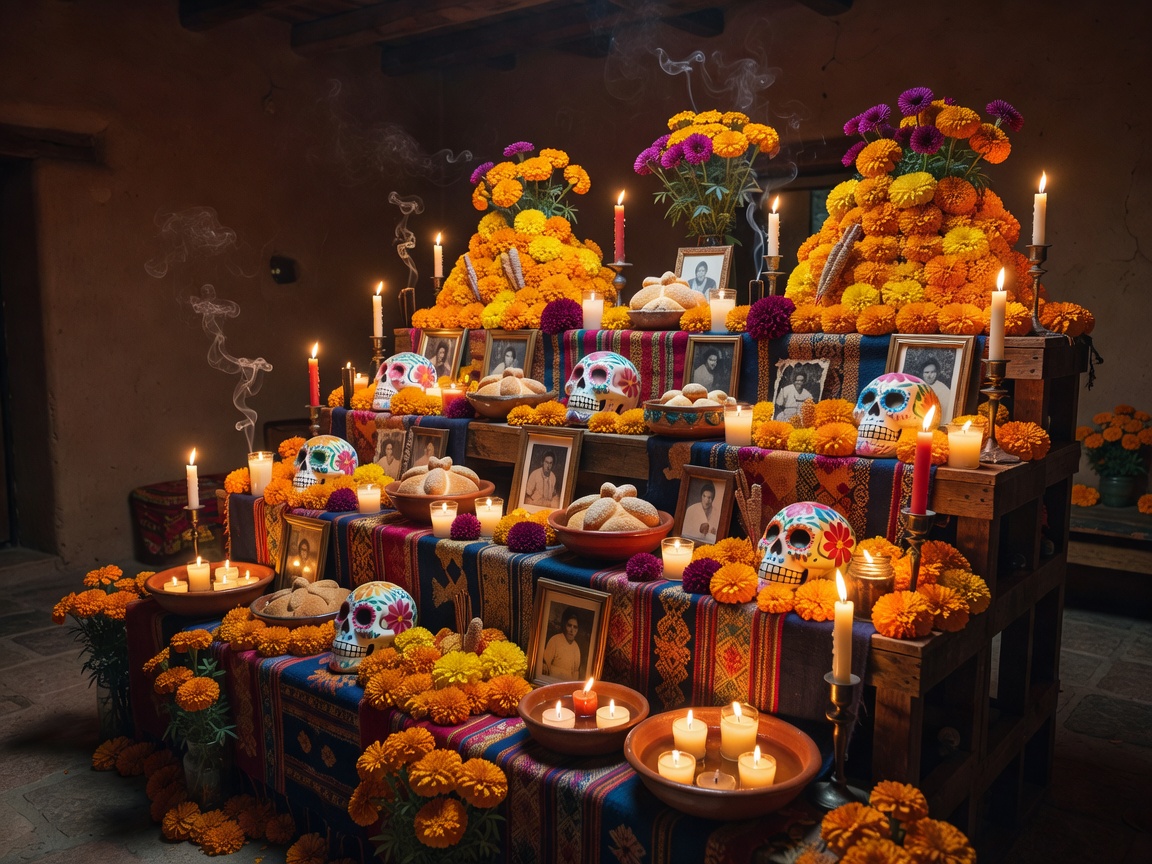
Far from a solemn or somber occasion, Día de los Muertos (Day of the Dead) in Oaxaca is a vibrant celebration of life, memory, and spiritual connection. Rooted in pre-Columbian Zapotec and Mixtec ancestral rites combined with Catholic All Saints' traditions, this sacred festival asserts that death is not an ending, but a natural phase in the eternal continuum of existence.
The Symbolism of the Ofrenda
The centerpiece of every Oaxacan home is the ofrenda. These intricate altars feature water to quench the spirits' long journey, salt for purification, copal incense to carry prayers upward, and favorite foods of the deceased including mole negro, mezcal, and sugar skulls (calaveritas).
San Xolo and Cemetery Ceremonies
On the nights of October 31 through November 2, families gather at local cemeteries such as Panteón General and San Xoxocotlán. Tombstones are lovingly cleaned and carpeted with orange marigold petals and hundreds of votive candles while musicians play traditional boleros until sunrise.
Cultural Immersion Highlights
- Profound spiritual atmosphere and welcoming local hospitality.
- Exquisite culinary traditions (Oaxacan mole and hot chocolate).
- Visually enchanting art installations and floral carpets.
Travel & Etiquette Advice
- Respect private family vigils in cemeteries (ask before photos).
- Book accommodation in Oaxaca city 6-9 months in advance.
- Be prepared for large evening crowds during comparsas.
Official Oaxaca Tourism Information
For official event schedules and cultural walking tours in Oaxaca:
Explore Mexico Tourism Official Site