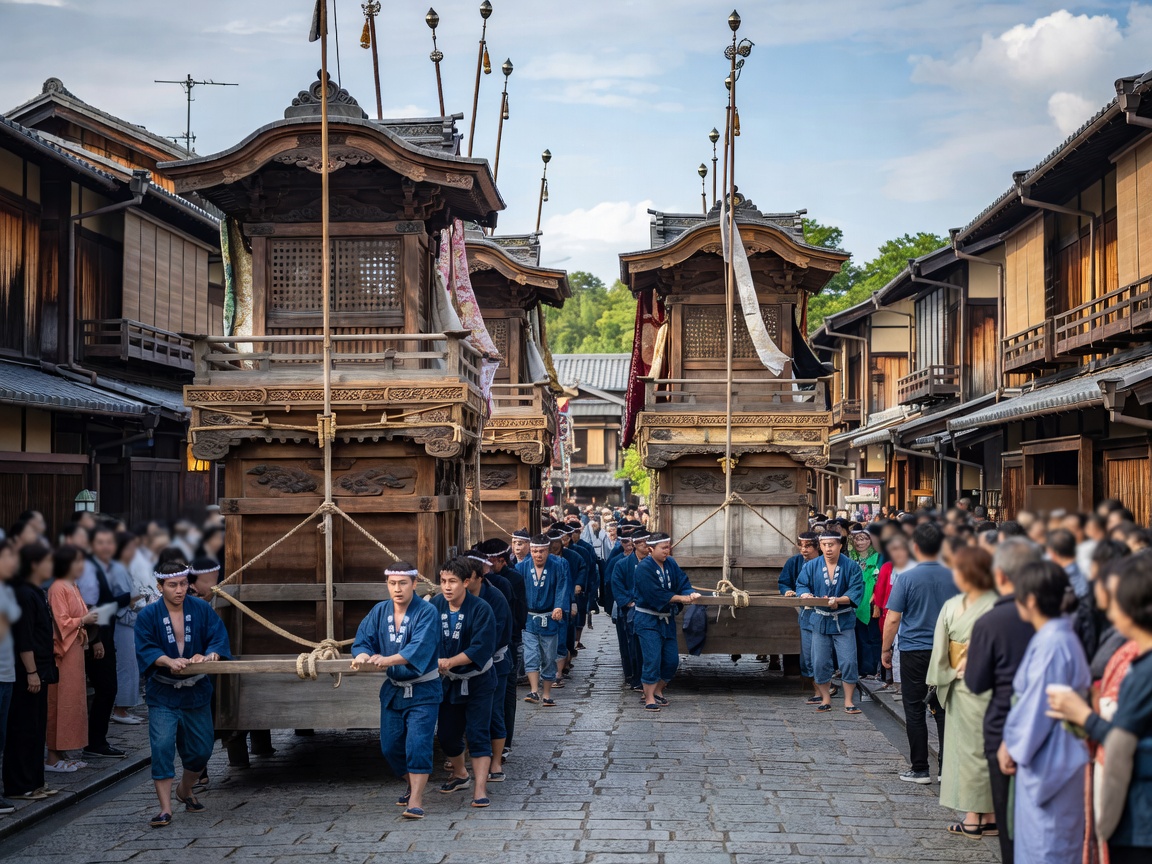
Spanning the entire month of July, Kyoto’s Gion Matsuri is one of Japan's most historic and venerated Shinto celebrations. Organized by Yasaka Shrine, the festival was established in the year 869 AD as a goryo-e ritual to appease deities and cleanse the imperial capital of epidemic plagues.
Craftsmanship & The Mobile Museums
The highlights of the festival are the Yamaboko Jun巡 float processions on July 17 (Saki-matsuri) and July 24 (Ato-matsuri). The floats are adorned with priceless antique tapestries from Persia, Belgium, and Japan, earning them the title "moving art museums." Master carpenters construct these massive structures using complex traditional rope-tying techniques known as nawa-shirami.
Yoiyama Nights & Kimono Culture
During the three nights preceding the main processions (Yoiyama), central Kyoto's Shijo-dori avenue is closed to vehicle traffic. Visitors stroll in cotton yukata, enjoying traditional Japanese street cuisine, listening to Gion-bayashi flute and drum music, and purchasing protective chimaki amulets.
Highlights
- Unparalleled glimpse into authentic Kyoto Shinto traditions.
- Exceptional artisan textiles and historic wooden architecture.
- Vibrant evening festival atmosphere across central Kyoto.
Travel Insights
- High summer heat and humidity in Kyoto during July.
- Large crowds along Shijo and Kawaramachi avenues.
- Reserved seating for parade requires booking in June.
Kyoto City Tourism Association
For official parade maps, reserved grandstand seating, and event schedules:
Visit Official Kyoto Travel Guide