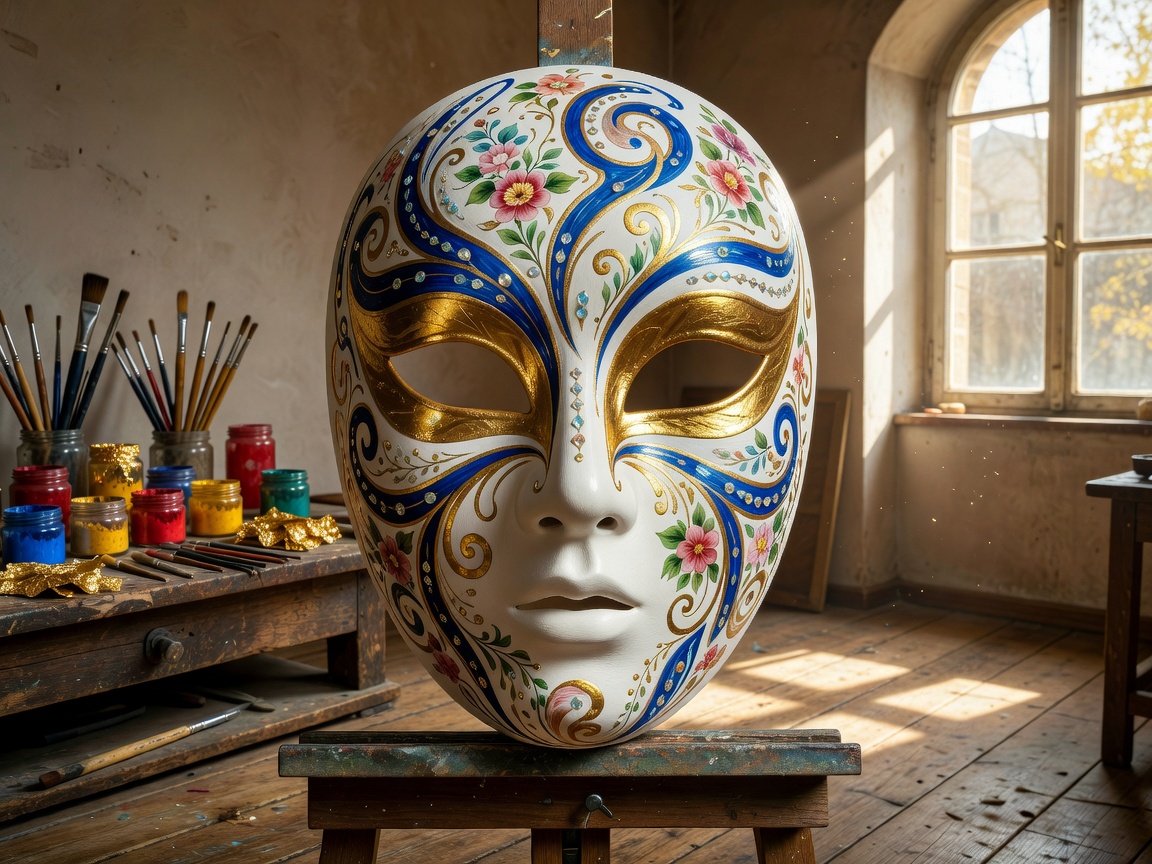
The Art of Masking Across Cultures: Identity & Anonymity
To put on a mask is to step outside oneself. Throughout history, masks have served not merely as disguise, but as transformative instruments that suspend social rules, invoke ancestral spirits, and express universal human archetypes.
"A mask tells us more than a face. In concealing identity, it grants permission for truth."
1. The Venetian Bauta: Equality in Anonymity
In 18th-century Venice, the Bauta mask was regulated by law during Carnival and political votes. Its distinctive protruding lower jaw allowed wearers to converse, eat, and drink without removing the mask, enabling patricians and commoners to interact on equal terms.
2. Noh Theater Masks of Japan
In classic Japanese Noh drama, carved cypress wood masks (like the Koomote) are sculpted with subtle three-dimensional neutrality. By tilting their head upward or downward, actors alter how ambient light strikes the mask, changing the expression instantly from tragic sorrow to subtle joy.
3. West African Ceremonial Masquerades
In Yoruba and Dogon traditions, masquerade performers (Egúngún) do not simply wear masks—they embody ancestral spirits. The mask serves as a sacred portal transmitting wisdom and moral guidance to the community.
Summary
Whether carved from Venetian porcelain, Japanese cypress, or African cedar, masks remain humanity's most enduring tool for theatrical, social, and spiritual elevation.