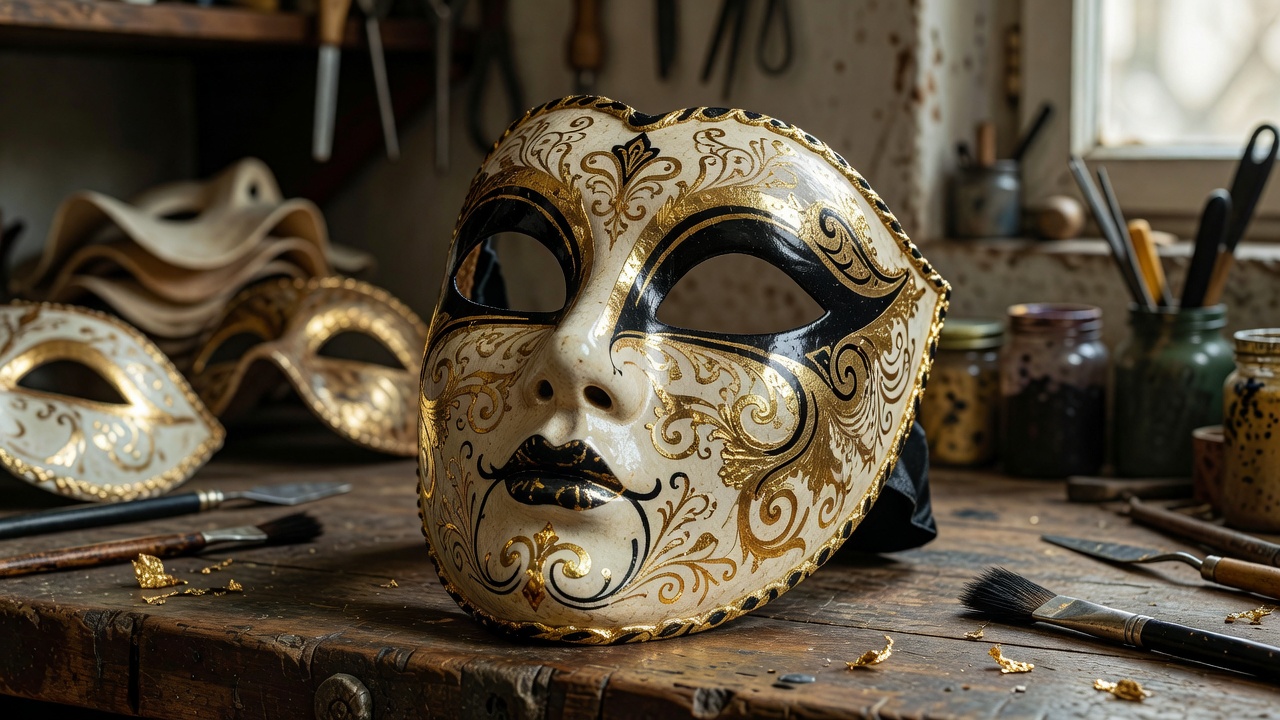
To understand Venice during the height of La Serenissima is to understand the absolute necessity of shadows. Surrounded by water and constrained within a dense, tightly monitored island city-state, Venetians developed a complex relationship with identity. Masking was not merely a festive diversion; it was a constitutional mechanism that protected citizens against political retribution, class tyranny, and social rigidity.
1. The Bauta: The Mask of Equal Rights
The Bauta is perhaps the most iconic Venetian archetype. Comprising a stark white porcelain or paper-mâché face with a dramatically tilted lower jawline, black tricorn hat, and heavy silk cape (tabarro), the Bauta rendered its wearer entirely anonymous. The unique forward projection of the jaw served two functional purposes: it disguised the wearer's voice tone while allowing them to drink wine and eat sweet fritole without revealing their face.
2. The Medico della Peste: From Medical Horror to Masquerade Classic
Unlike traditional festive masks, the plague doctor mask (Medico della Peste) originated in genuine horror. Designed in the 17th century by French physician Charles de Lorme, the long beak was stuffed with aromatic spices, dried flowers, and camphor to filter bad air (miasma) believed to carry the bubonic plague. Over centuries, Venetian theatrical tradition transformed this symbol of mortality into a poignant reminder of human fragility amidst intense revelry.
3. The Moretta: The Silent Mystery
Perhaps the most enigmatic mask was the Moretta—a oval black velvet mask worn exclusively by noble women. The mask had no straps; instead, it was held in place by a small wooden bit held between the wearer’s teeth. This rendered the woman completely mute, forcing her to communicate solely through physical grace, fan gestures, and eye contact—creating an atmosphere of captivating, quiet mystery in Venetian salons.
Preserving the Craft in Modern Venice
Today, true Venetian mask making (mascareri) remains a protected artisan discipline. Using plaster molds, layered damp paper-mâché, and meticulous gilding with 24-karat gold leaf, master craftspeople keep centuries of secret geometry alive amidst modern mass production.